1. GIÁ CẢ THỊ TRƯỜNG



2. BIẾN ĐỘNG GIÁ


3. TIN THỊ TRƯỜNG
Ngành dệt may toàn cầu đang có dấu hiệu phục hồi mặc dù phải đối mặt với nhiều thách thức: ITMF
Dựa trên Khảo sát ngành Dệt may Toàn cầu (GTIS) mới nhất do Liên đoàn Các nhà sản xuất Dệt may Quốc tế (ITMF) thực hiện vào tháng 7/2023, ngành dệt may toàn cầu đã cho thấy những dấu hiệu cải thiện, ngay cả trong điều kiện đầy thách thức đang diễn ra. Cuộc khảo sát cho thấy ngày càng có nhiều công ty thích ứng hiệu quả với môi trường kinh doanh khó khăn.
Phân tích theo khu vực của cuộc khảo sát chỉ ra rằng Châu Á đang phải đối mặt với những khó khăn đáng kể nhất, trong khi Nam Mỹ đã có sự phục hồi đáng chú ý. Kỳ vọng kinh doanh toàn cầu không thay đổi kể từ tháng 3/2023, sự lạc quan vẫn cao ở tất cả các khu vực về sự cải thiện tình hình trong sáu tháng tới ngoại trừ Đông Á.
Dệt/dệt kim và nhuộm/hoàn thiện/in là hai phân khúc mà kỳ vọng đã chuyển sang tiêu cực. Lượng đơn đặt hàng là âm ở tất cả các khu vực và phân khúc, mặc dù có tăng nhẹ vào tháng 7/2023. Các nhà sản xuất hàng may mặc, dệt gia dụng và dệt kỹ thuật đã có những cải thiện, nhưng cán cân tổng thể vẫn âm. Đáng chú ý, tồn đọng đơn đặt hàng (order backlog) đã đạt đến mức thấp nhất từng được ghi nhận trong GTIS, chỉ có khu vực Nam Mỹ và hàng dệt kỹ thuật có sự tăng trưởng.
Tỷ lệ sử dụng công suất đã đạt đến mức thấp nhất từng được ghi nhận trong cuộc khảo sát. Cả châu Á và châu Âu đều chứng kiến sự sụt giảm liên tục kể từ năm 2021, trong đó các nhà sản xuất hàng dệt gia dụng và dệt kỹ thuật đều giảm trong thời gian gần đây. Những lo ngại chính bao gồm nhu cầu suy yếu, lạm phát, giá nguyên liệu thô cao hơn, địa chính trị và giá năng lượng cao hơn. Tuy nhiên, có một số dấu hiệu tích cực, chi phí logistics, năng lượng và nguyên vật liệu đã giảm trong khi địa chính trị vẫn là mối lo ngại, nhưng không xấu đi.
Số lượng đơn đặt hàng bị hủy vẫn tương đối thấp trên phạm vi toàn cầu, do hầu hết các công ty trong chuỗi cung ứng dệt may báo cáo mức tồn kho trung bình hoặc thấp, khiến cho việc hủy bỏ không cần thiết. Đáng ngạc nhiên là 96% các nhà sản xuất hàng may mặc cũng báo cáo mức tồn kho trung bình hoặc thấp, trong khi các doang nghiệp xơ sợi, dệt/đan có mức tồn kho cao nhất.
Tóm lại, khảo sát của ITMF cho thấy ngành dệt may toàn cầu đang trên đà phục hồi khi các công ty điều đang thích nghi với môi trường đầy thách thức và có những cải thiện. Những thách thức vẫn tồn tại ở một số khu vực và phân khúc nhất định, với những lo ngại về nhu cầu suy yếu và các yếu tố bên ngoài ảnh hưởng đến quỹ đạo của ngành. Quản lý hiệu quả những thách thức này và tận dụng các xu hướng tích cực sẽ rất quan trọng để duy trì sự phục hồi của ngành.
Nguồn: Fashionating World_Ngọc Trâm biên dịch
=======
Global textile industry shows signs of recovery amidst challenges: ITMF
According to the latest Global Textile Industry Survey (GTIS) conducted by the International Textile Manufacturers Federation (ITMF) in July 2023, the global textile industry has shown signs of improvement despite the persisting negative conditions. The survey indicates that an increasing number of companies have successfully adapted to the challenging business environment, leading to reported improvements worldwide.
Regional Analysis: Asia Struggles While South America Bounces Back
The survey’s regional analysis highlights Asia as the region facing the most significant struggles, while South America has made a remarkable comeback, returning to positive territory. Interestingly, global business expectations have remained unchanged since March 2023. However, optimism remains high across all regions for the situation to improve within the next six months, with the exception of East Asia, where concerns linger.
Segmental Trends: Weavers, Knitters, Dyers, and Finishers Report Negative Expectations
The GTIS identifies weavers/knitters and dyers/finishers/printers as two segments where expectations have turned negative. Despite a slight increase in order intake recorded in July 2023, the survey reports negative order intake across all regions and segments. While garment, home textile, and technical textile producers have experienced significant improvements, the overall balance remains negative. Notably, the order backlog has hit the lowest level ever recorded in the GTIS, with only South America and technical textiles showing any growth.
Capacity Utilization and Concerns: Industry Faces Challenges on Multiple Fronts
The capacity utilization rate has plummeted to its lowest level since the inception of the survey. Asia and Europe have witnessed a steady decrease since 2021, with home textile and technical textile producers experiencing recent drops. The major global concern in July 2023 is “Weakening demand,” followed by “Inflation,” “Higher raw material prices,” “Geopolitics,” and “Higher energy prices.” However, some positive signs include falling costs for logistics, energy, and raw materials, and “Geopolitics” maintaining its position in the rankings without worsening.
Inventory Levels and Cancellations: A Ray of Hope Amidst Challenges
The number of canceled orders has remained relatively low on a global scale, attributed to most companies in the textile supply chain reporting average or low inventory levels, rendering cancellations obsolete. Surprisingly, 96% of garment manufacturers also report average or low inventory levels, while spinners, weavers/knitters, and fiber producers report the highest inventories.
In conclusion, the ITMF’s GTIS showcases a global textile industry on the path to recovery, with companies adapting to the challenging environment and reporting improvements. However, challenges persist, particularly in certain regions and segments, while concerns over weakening demand and other external factors continue to impact the industry’s trajectory. The ability to effectively manage these challenges and seize positive trends will be crucial for sustaining the industry’s recovery.
Source: Fashionating World
==============
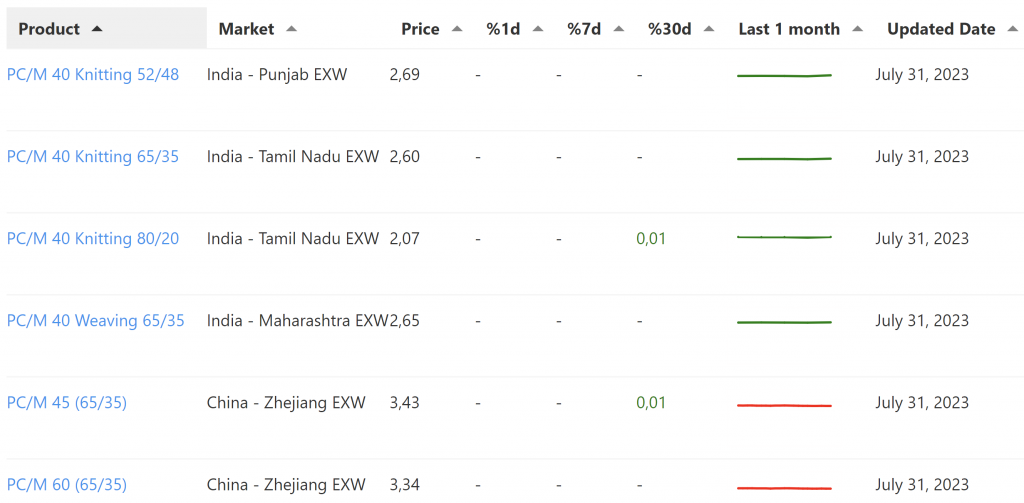
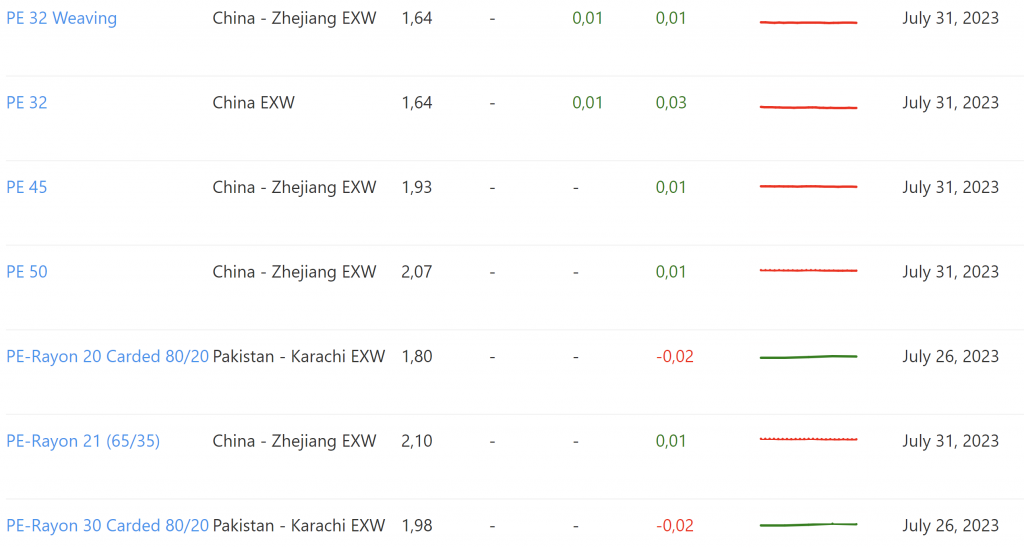
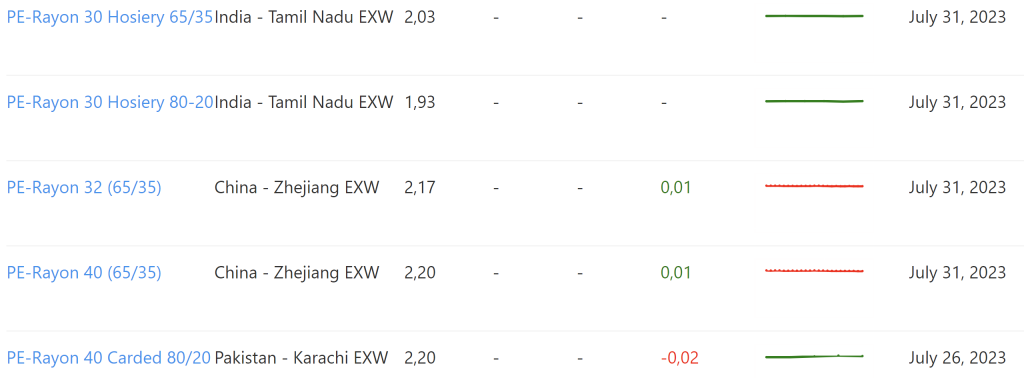
- Price database is referenced from domestic market of China, India, Pakistan, Bangladesh .
- The unit price of yarn referred from Chinese market and other countries which is different from the unit price of yarn produced in Vietnam, so please refer to the weekly price data and historical price fluctuations for the range of market price fluctuations per period.
- The article analyzes, comments and evaluates the market price referenced from many sources. Translated and edited by VCOSA in Vietnamese. There is always an original to compare just below each news.
- Some yarn price information is hidden for privacy (VCOSA members only), for more information, please call our hotline at + 84-902379490.
- Website www.vietnamyarnprice.com has officially launched. Portal to look up and share prices of the yarn industry in Vietnam and other countries.