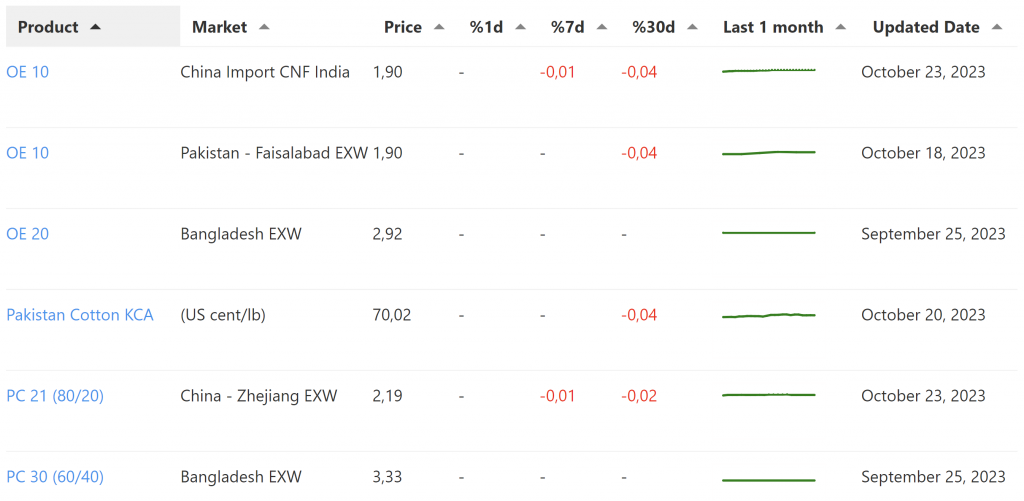
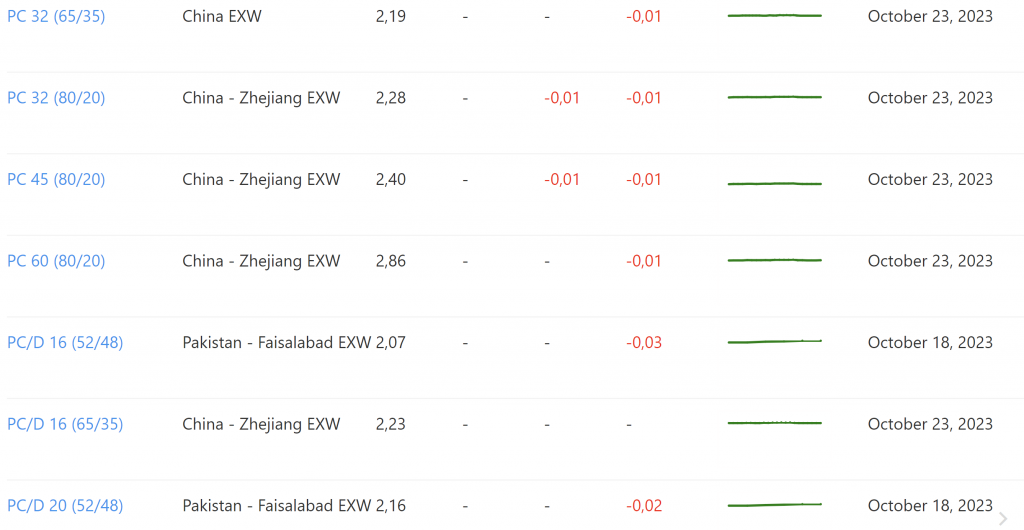
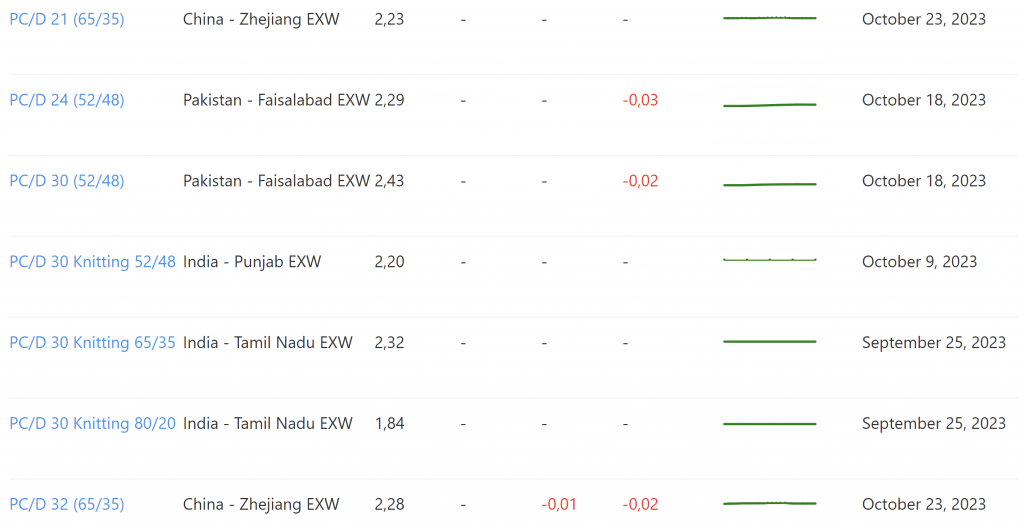
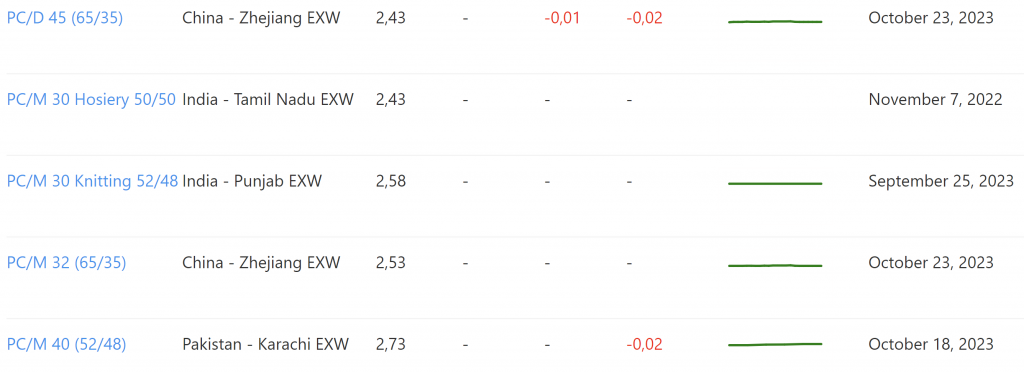
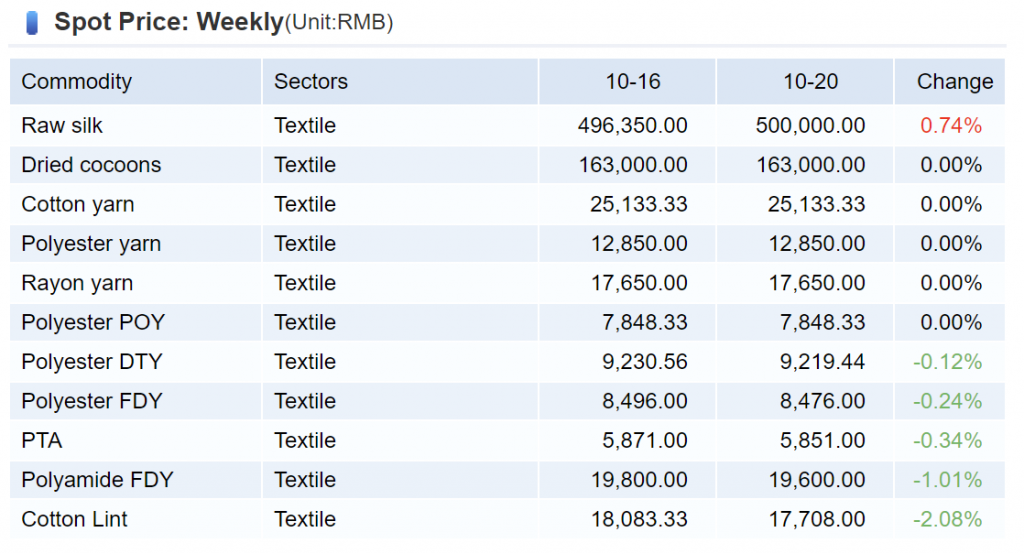
1. GIÁ CẢ THỊ TRƯỜNG
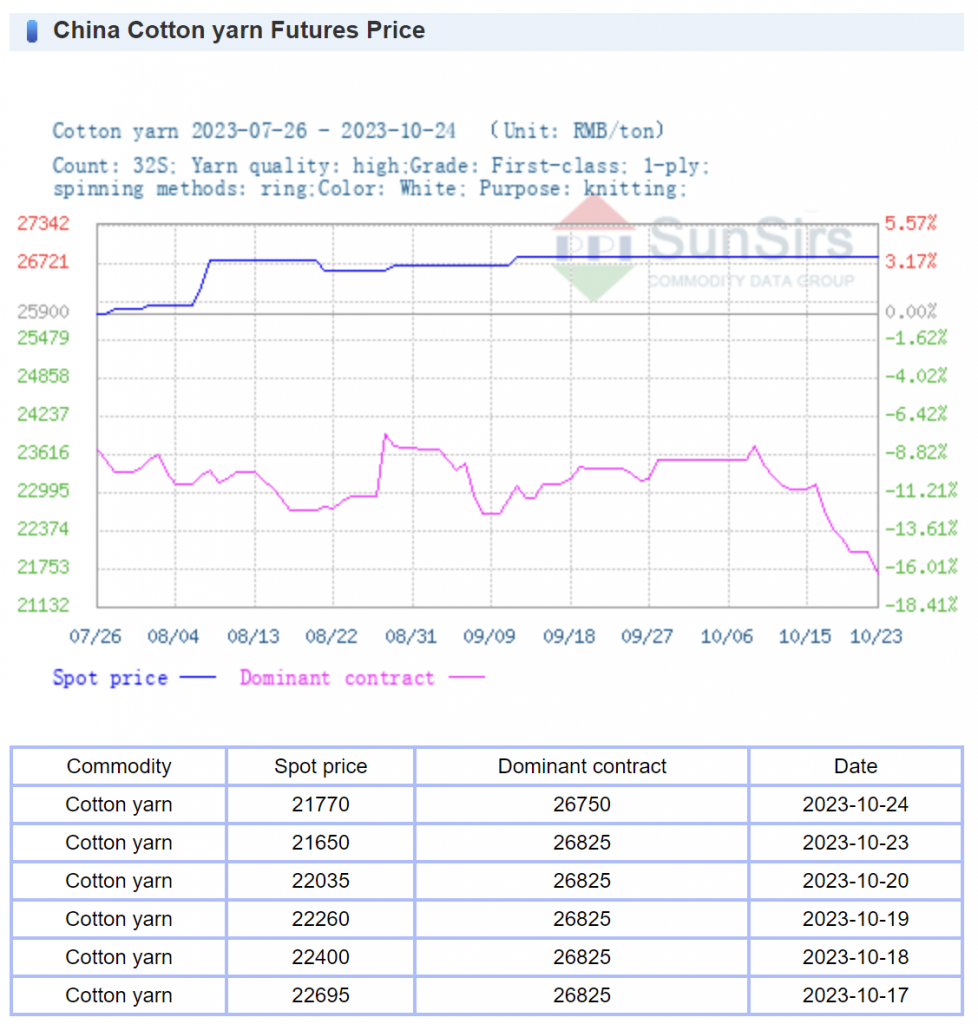
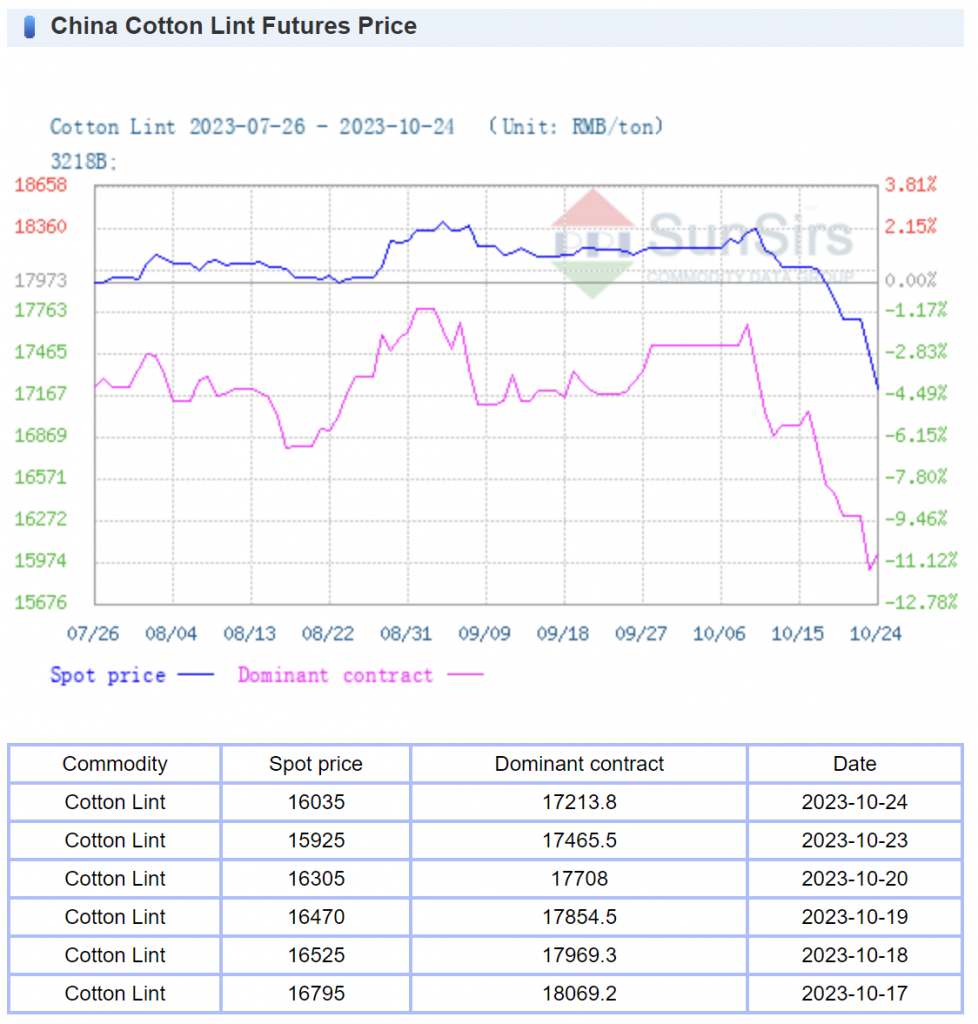
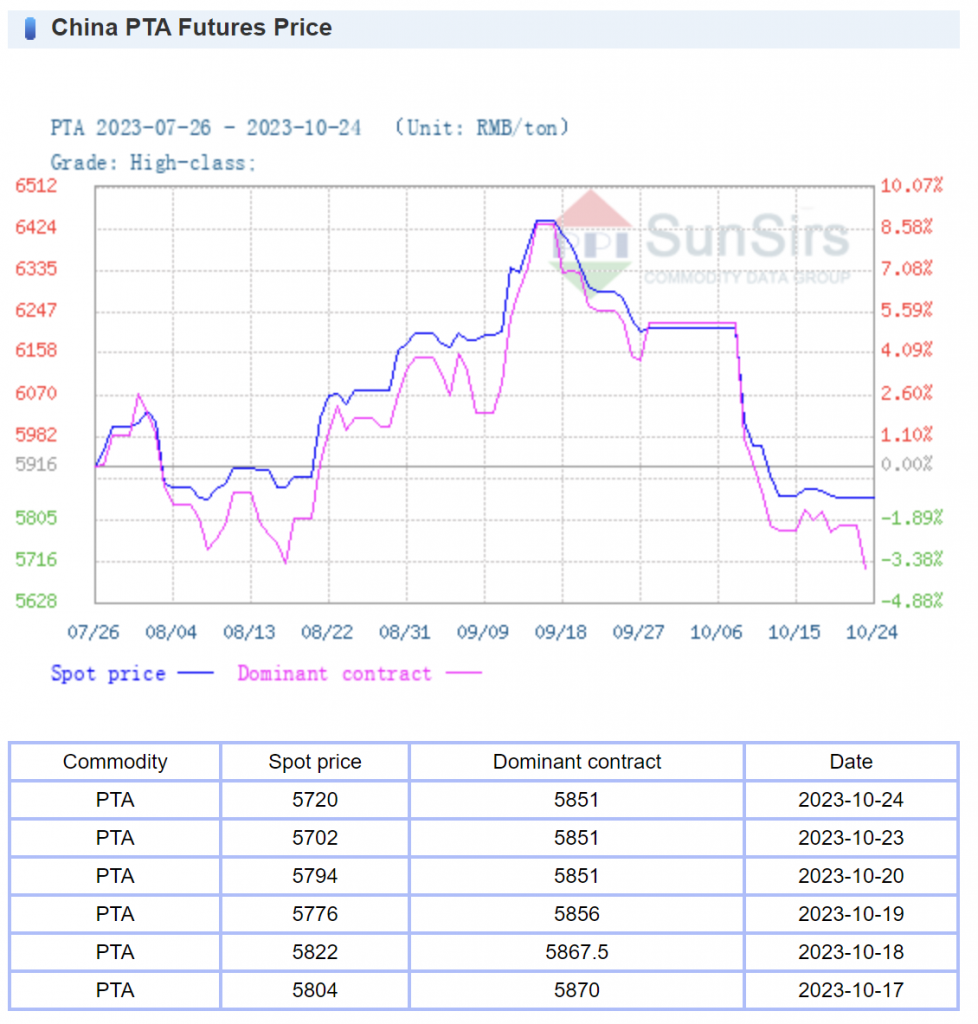
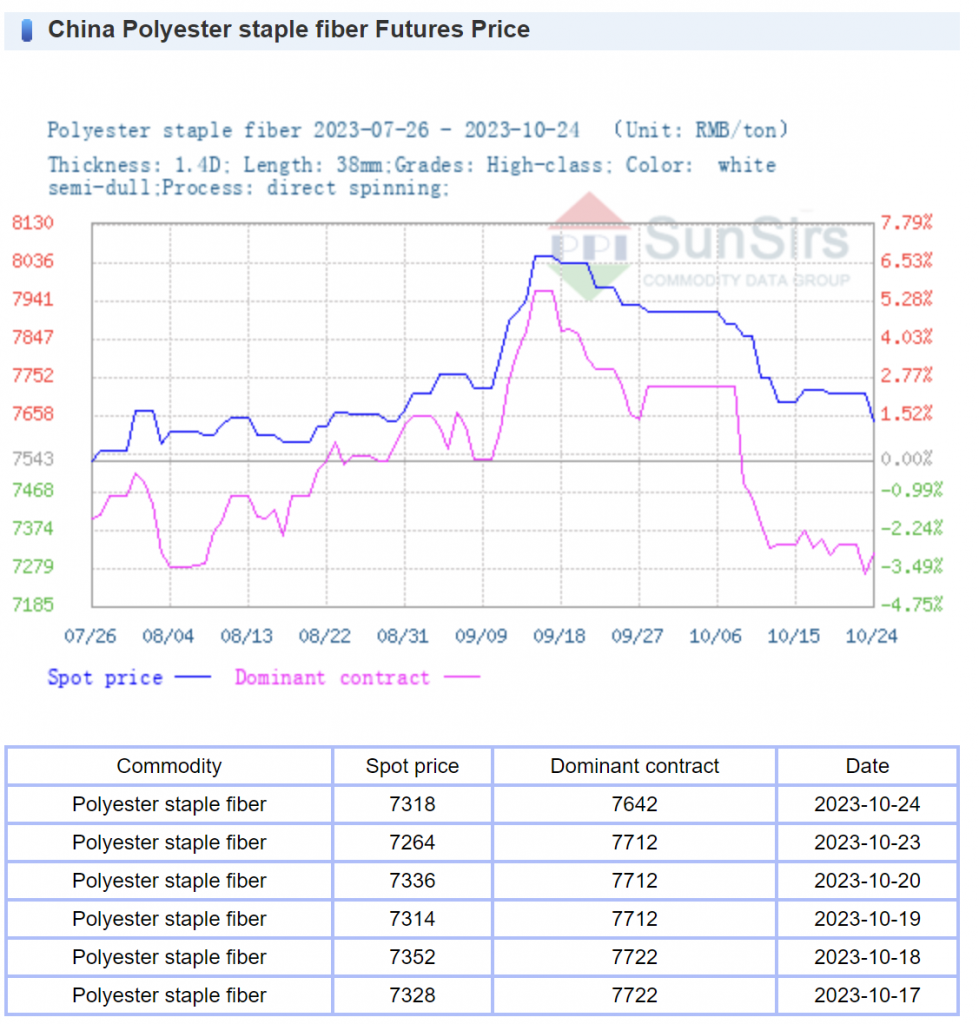
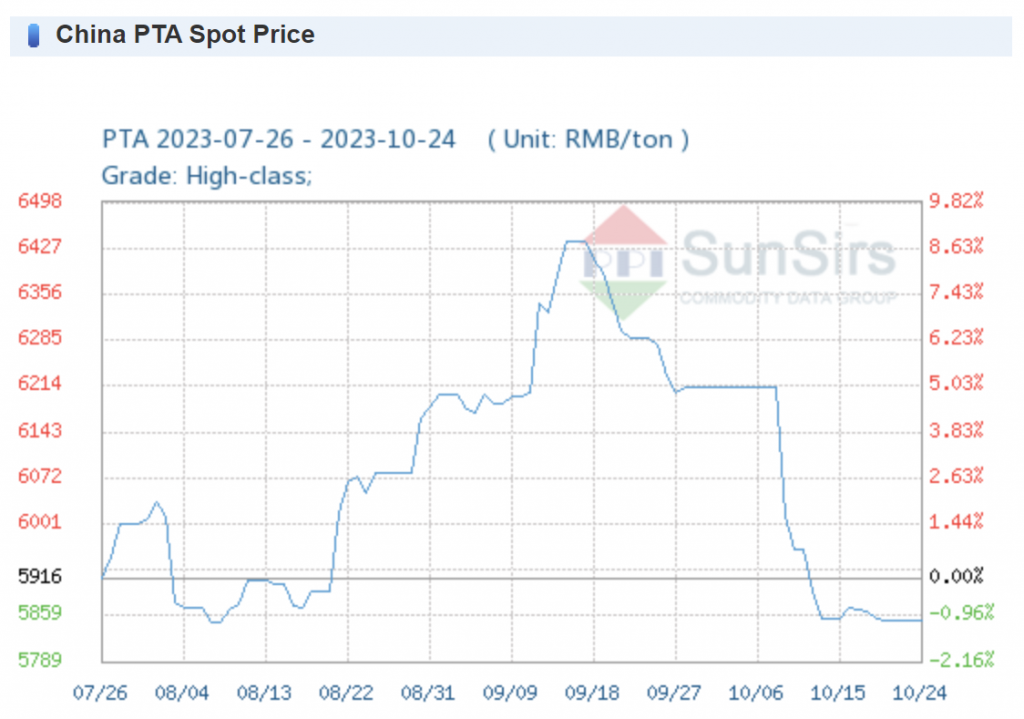
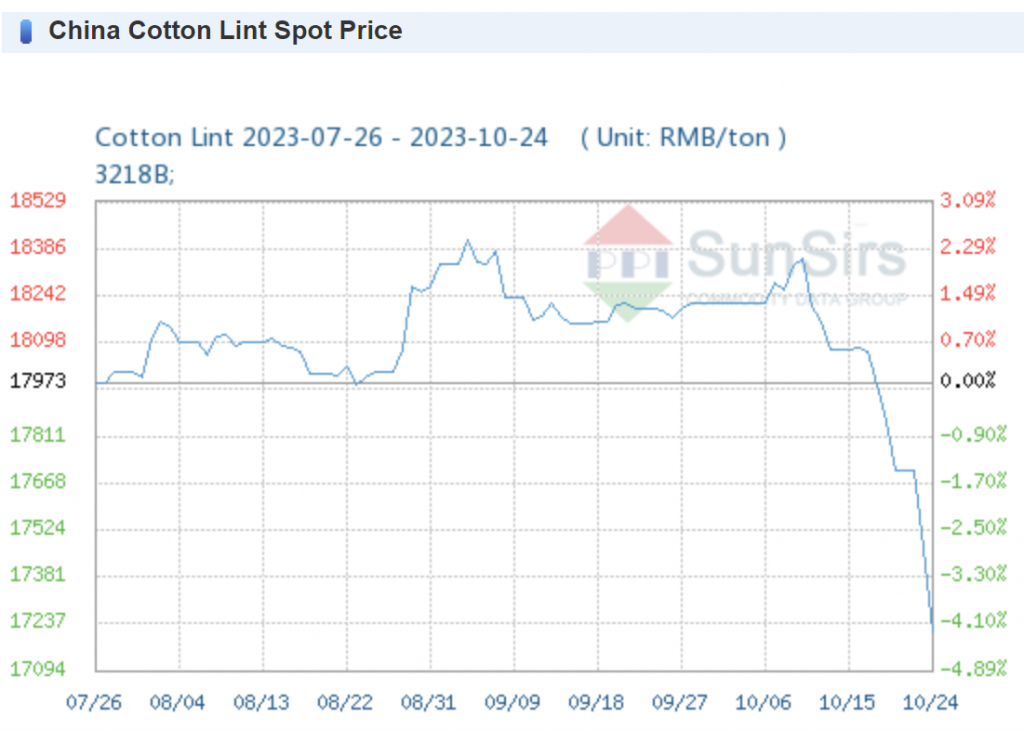
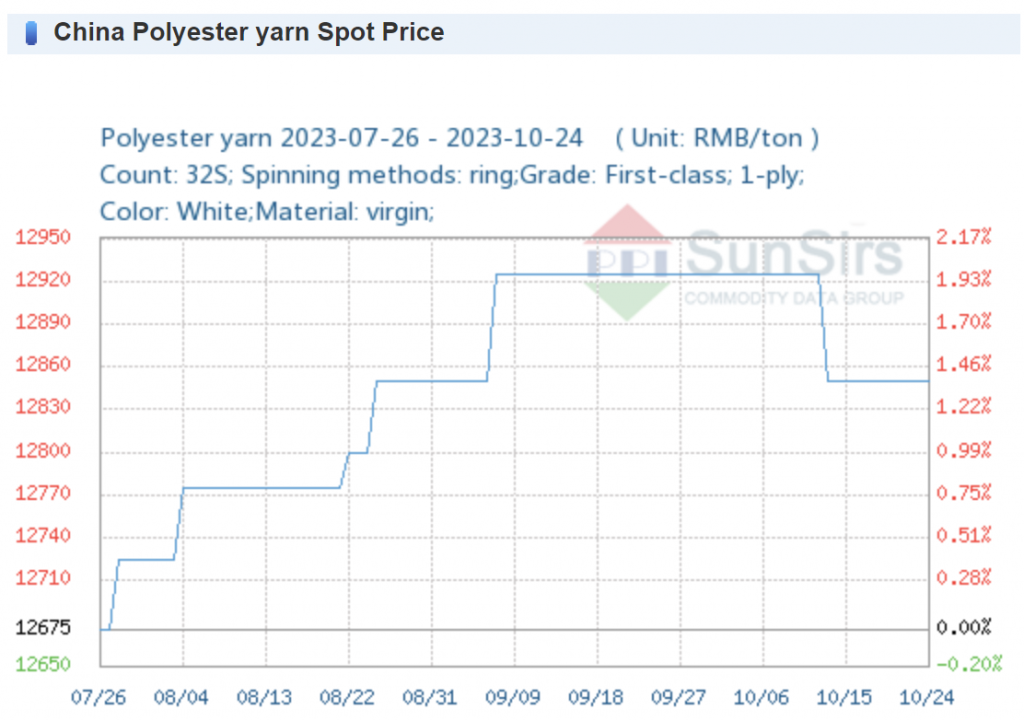
2. BIẾN ĐỘNG GIÁ
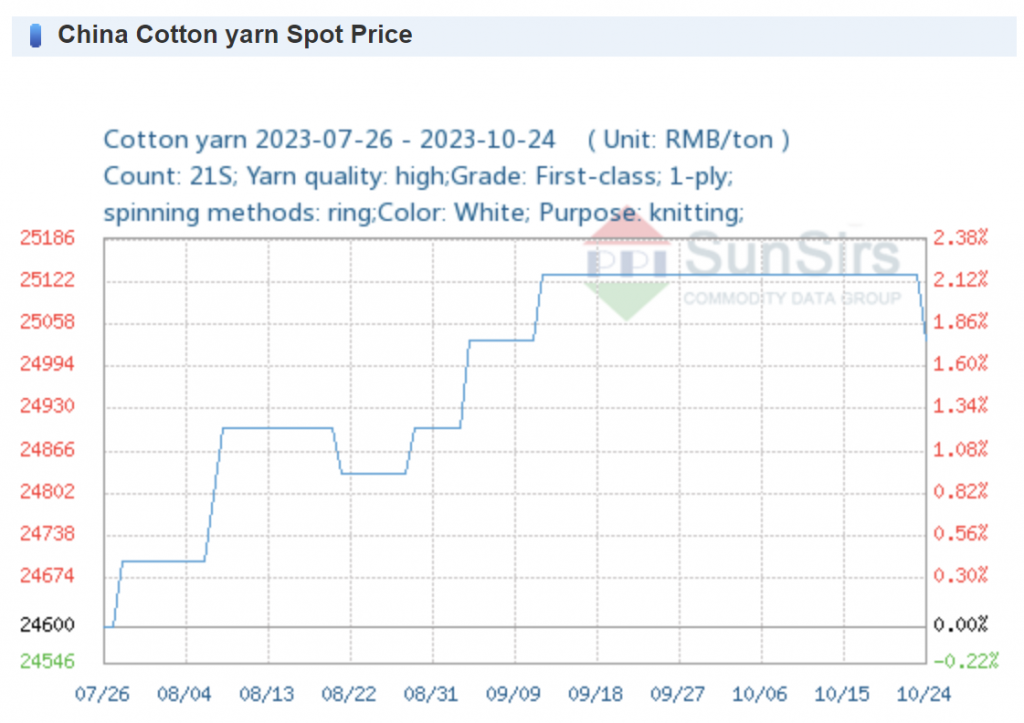
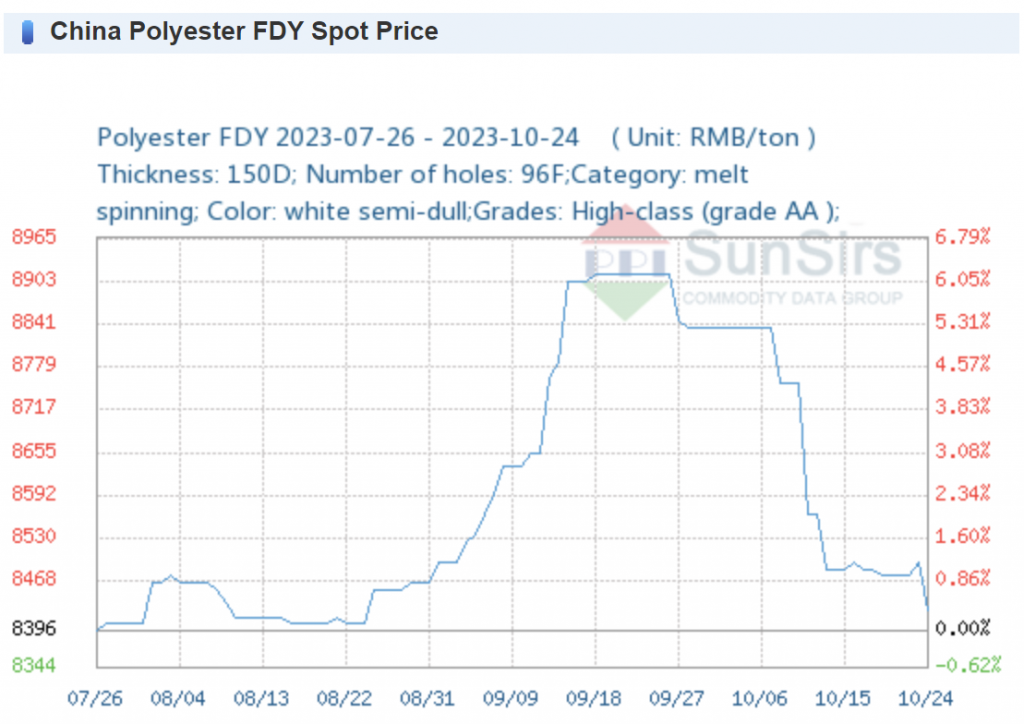
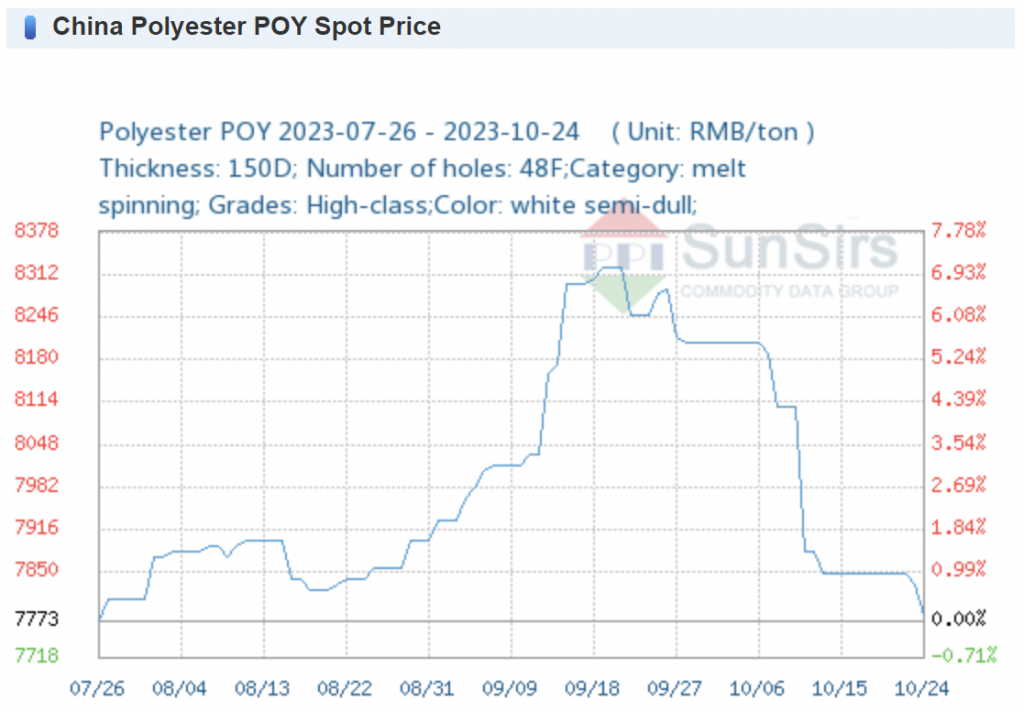
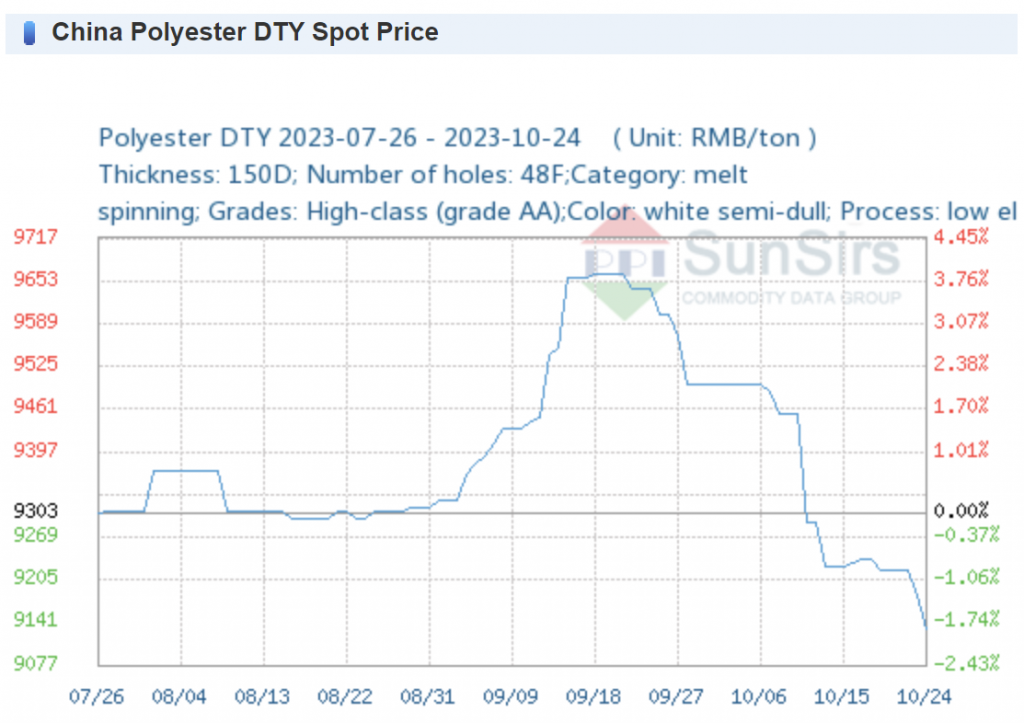
3. TIN THỊ TRƯỜNG
Các nhà máy kéo sợi ở miền nam Ấn Độ đang chịu áp lực, sợi cotton chải thô giảm giá
Nhu cầu giảm trong chuỗi giá trị dệt may đã khiến giá sợi cotton giảm tại thị trường Tirupur ở Tamil Nadu. Giá sợi cotton chải thô các loại đã giảm 3%-5%. Các nguồn tin thương mại cho biết các nhà máy kéo sợi đang phải đối mặt với áp lực ngày càng tăng trong việc bán sợi với giá thấp do họ cần vốn lưu động để vận hành hoạt động kinh doanh của mình. Các nhà máy kéo sợi cỡ vừa và nhỏ ở Tamil Nadu chuyên sản xuất sợi cotton chải thô. Trong khi thị trường Mumbai cũng chứng kiến nhu cầu trì trệ từ các chủ sở hữu máy dệt, giá sợi cotton vẫn chưa giảm. Tuy nhiên, xu hướng giảm giá không thể loại trừ trong những ngày tới.
Giá sợi cotton chải thô giảm ở thị trường Tiruppur, nhưng sợi cotton chải kỹ vẫn ở mức trước đó. Giá được ghi nhận theo công cụ hiểu biết thị trường TexPro của Fibre2Fashion.
- Sợi cotton chải kỹ chi số 30 ở mức 260-265 Rs/ kg (chưa bao gồm GST),
- Sợi cotton chải kỹ chi số 34 ở mức 268-273 Rs/kg,
- Sợi cotton chải kỹ chi số 40 ở mức 280-285 Rs/kg,
- Sợi cotton chải thô chi số 30 có giá 235-238 Rs/kg,
- Sợi cotton chải thô chi số 34 ở mức 238-243 Rs/kg,
- Sợi cotton chải thô chi số 40 có giá 247-252 Rs/kg.
Giá sợi cotton tại thị trường Mumbai đang có xu hướng ổn định nhưng nhu cầu không hỗ trợ. Các thương lái cho rằng giá sợi cotton trên thị trường có thể giảm. Sẽ rất khó khăn để duy trì giá ở mức hiện tại do nhu cầu yếu. Một thương nhân có trụ sở tại Mumbai nói với Fibre2Fashion: “Các nhà máy dệt ở Maharashtra và các khu vực khác đang giảm sản lượng do nhu cầu vải từ ngành may mặc kém. Nhu cầu lễ hội không thể thúc đẩy chuỗi giá trị dệt may.”
Giá sợi tại Mumbai theo TexPro:
- Sợi chải thô chi số 60 thuộc loại sợi dọc và sợi ngang được bán với giá lần lượt là 1.400-1.420 Rs và 1.275-1.330 Rs/5 kg (không bao gồm GST),
- Sợi dọc chải kỹ chi số 60 giá 315-322 Rs/kg,
- Sợi ngang chải thô chi số 80 giá 1.380-1.420 Rs mỗi 4,5 kg,
- Sợi dọc chải thô 44/46 giá 250-255 Rs/kg,
- Sợi dọc chải thô 40/41 có giá 236-242 Rs/kg,
- Sợi dọc chải kỹ 40/41 giá 262-266 Rs/kg,
- Sợi dọc chải thô 30/32 có giá 225-230 Rs mỗi kg.
Tại thị trường Gujarat, giá bông gần đây đã giảm 300-500 Rs/candy loại 356 kg. Sự sụt giảm này có thể là do lượng hàng đến tăng lên và lượng mua hàng hạn chế của các nhà máy kéo sợi, do đó gây áp lực buộc các nhà máy cán bông phải giảm giá. Hầu hết các nhà máy cán bông đã bắt đầu hoạt động trong thời gian diễn ra lễ hội Navratri. Tuy nhiên, các nhà máy kéo sợi tỏ ra ít quan tâm đến việc mua hơn vì họ dự đoán nhu cầu từ ngành dệt may sẽ hạn chế.
Tại thị trường Gujarat, bông Shankar-6 mùa mới được báo giá ở mức 57.200-57.500 Rs/candy, trong khi bông cũ được báo giá khoảng 58.000-58.300 Rs/candy. Tổng lượng hàng đến Gujarat là khoảng 25.000 kiện, mỗi kiện nặng 170 kg, trong khi lượng hàng đến toàn quốc ước tính khoảng 78.000 đến 80.000 kiện.
Ngọc Trâm (theo Fibre2Fashion)
**********
Spinning mills under pressure in south India, carded cotton yarn down
Reduced demand throughout the textile value chain has led to a decline in cotton yarn prices in the Tiruppur market of Tamil Nadu. Prices have fallen by ₹3-5 per cent for various counts in the carded variety of cotton yarn. Trade sources reported that mills are facing increased pressure to sell yarn at lower prices due to the need for liquidity in their business operations. MSME spinning mills in Tamil Nadu specialise in producing cotton carded yarn. While the Mumbai market has also experienced sluggish demand from power loom owners, cotton yarn prices have not yet decreased. However, a downward trend in prices cannot be ruled out in the coming days.
The prices of carded cotton yarn came down in the Tiruppur market, but combed cotton yarn stayed at previous levels. The prices were noted as 30 count combed cotton yarn at ₹260-265 per kg (excluding GST), 34 count combed cotton yarn at ₹268-273 per kg, 40 count combed cotton yarn at ₹280-285 per kg, 30 count carded cotton yarn at ₹235-238 per kg, 34 count carded cotton yarn at ₹238-243 per kg and 40 count carded cotton yarn at ₹247-252 per kg , according to Fibre2Fashion’s market insight tool TexPro.
The Mumbai market has observed a steady trend in cotton yarn prices, but demand has not been supportive. Traders believe that cotton yarn prices in the market may decline. It will be challenging to maintain prices at their current level due to weak demand. A trader from Mumbai told Fibre2Fashion, “Power looms in Maharashtra and other regions are operating at reduced capacity due to poor demand for fabric from the garment industry. Festival demand has not been able to bolster the textile value chain.”
In Mumbai, 60 carded yarn of warp and weft varieties were sold at ₹1,400-1,420 and ₹1,275-1,330 per 5 kg (excluding GST), respectively. Other prices include 60 combed warp ₹315-322 per kg, 80 carded weft ₹1,380-1,420 per 4.5 kg, 44/46 carded warp ₹250-255 per kg, 40/41 carded warp ₹236-242 per kg, 40/41 combed warp ₹262-266 and 30/32 carded warp ₹225-230 per kg, as per TexPro.
In the Gujarat market, cotton prices have recently declined by ₹300-500 per candy of 356 kg. This drop can be attributed to higher arrivals and limited purchases by spinning mills, thereby exerting pressure on ginning mills to lower their prices. Traders have noted that most ginning mills have commenced their operations during the auspicious period of Navratri. However, spinning mills have shown less interest in buying as they anticipate limited demand from the weaving industry.
In the Gujarat market, the new season’s Shankar-6 cotton was quoted at ₹57,200-57,500 per candy, while old cotton was priced around ₹58,000-58,300 per candy. The total arrival in Gujarat amounted to approximately 25,000 bales of 170 kg each, with an estimated nationwide arrival of 78,000-80,000 bales.
Source: Fibre2Fashion
==============
- Price database is referenced from domestic market of China, India, Pakistan, Bangladesh .
- The unit price of yarn referred from Chinese market and other countries which is different from the unit price of yarn produced in Vietnam, so please refer to the weekly price data and historical price fluctuations for the range of market price fluctuations per period.
- The article analyzes, comments and evaluates the market price referenced from many sources. Translated and edited by VCOSA in Vietnamese. There is always an original to compare just below each news.
- Some yarn price information is hidden for privacy (VCOSA members only), for more information, please call our hotline at + 84-902379490.
- Website www.vietnamyarnprice.com has officially launched. Portal to look up and share prices of the yarn industry in Vietnam and other countries.