



Hanoi, December 5, 2024 – The Energy Efficiency and Sustainable Development Department under the Ministry of Industry and Trade of Vietnam, in collaboration with IDH and various associations in the textile, cotton, and footwear sectors, organized the international conference titled “Cooperation for Sustainable Development of Vietnam’s Textile and Footwear Industry.” The event aimed to address critical challenges in achieving sustainable development within these industries.
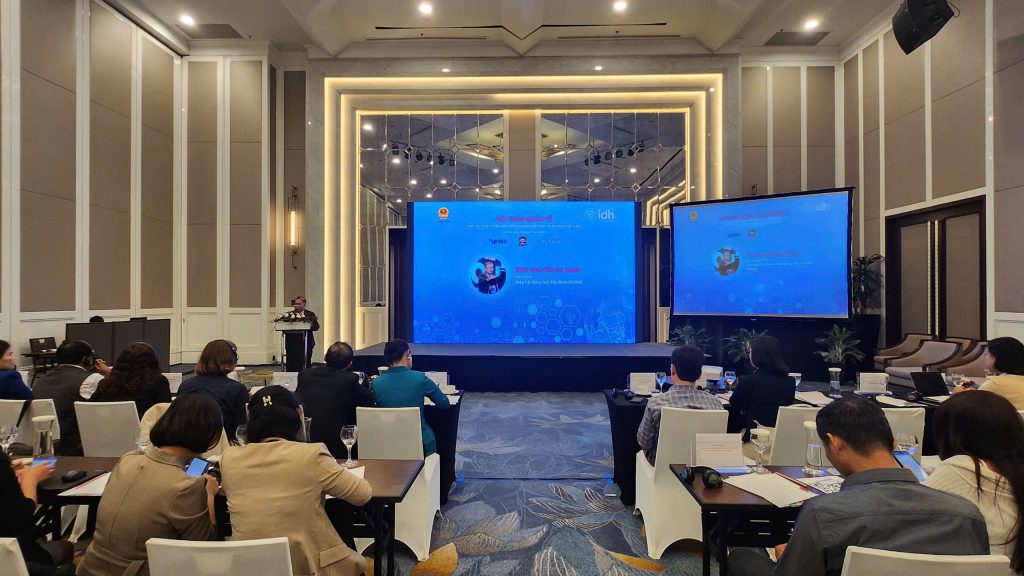
Overview of the International Conference: “Cooperation for Sustainable Development of Vietnam’s Textile and Footwear Industry”
The conference was grounded in the Memorandum of Understanding (MoU) signed on September 26, 2024, between the Ministry of Industry and Trade, the Vietnam Textile and Apparel Association (VITAS), the Vietnam Leather, Footwear, and Handbag Association (LEFASO), the Vietnam Cotton and Spinning Association (VCOSA), and IDH. This marked a significant milestone in fostering public-private partnerships (PPP), strengthening cooperation among government bodies, enterprises, and international organizations. Discussions focused on practical solutions such as green supply chain innovation, sustainable standards development, and strategies to access sustainable export markets.
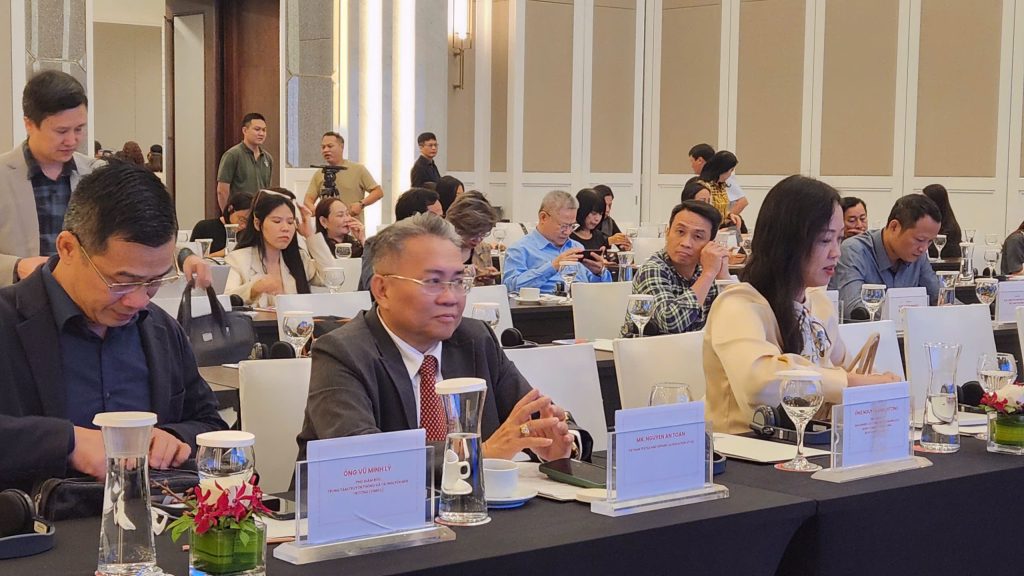
Mr. Nguyen An Toan – Chairman of VCOSA at the Conference
In his speech, Mr. Nguyen An Toan, Chairman of VCOSA, provided updates on Vietnam’s cotton and yarn market. Currently, the spinning industry operates approximately 12,6 million spindles, with projections for continued growth. Most spinning enterprises already have orders secured through December 2024. The main export markets remain the United States, Japan, South Korea, the European Union (EU), and China. Mr. Toan highlighted that Vietnam’s yarn sector aligns closely with global market trends, emphasizing the emerging opportunities and significant megatrends, particularly in sustainability.
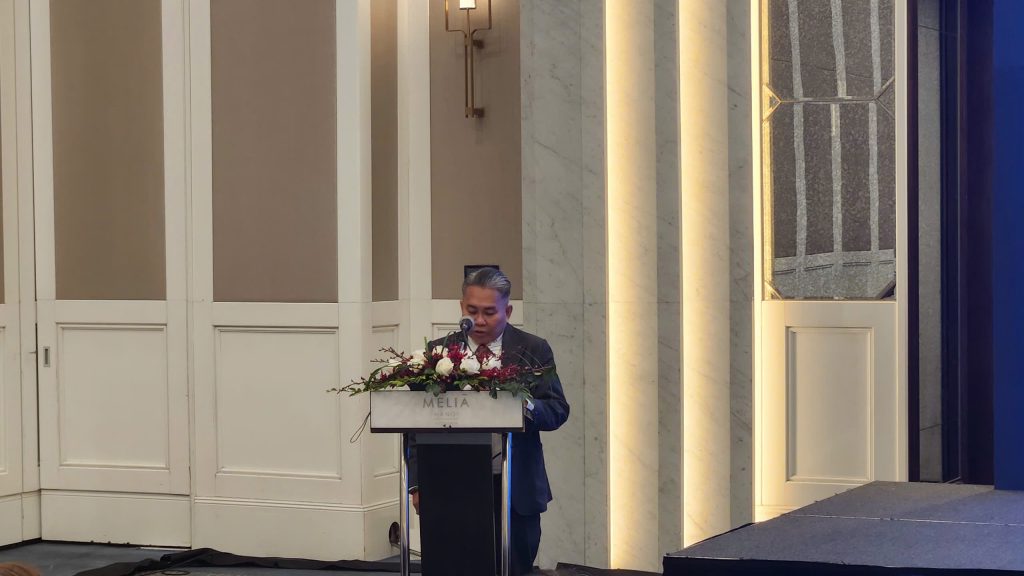
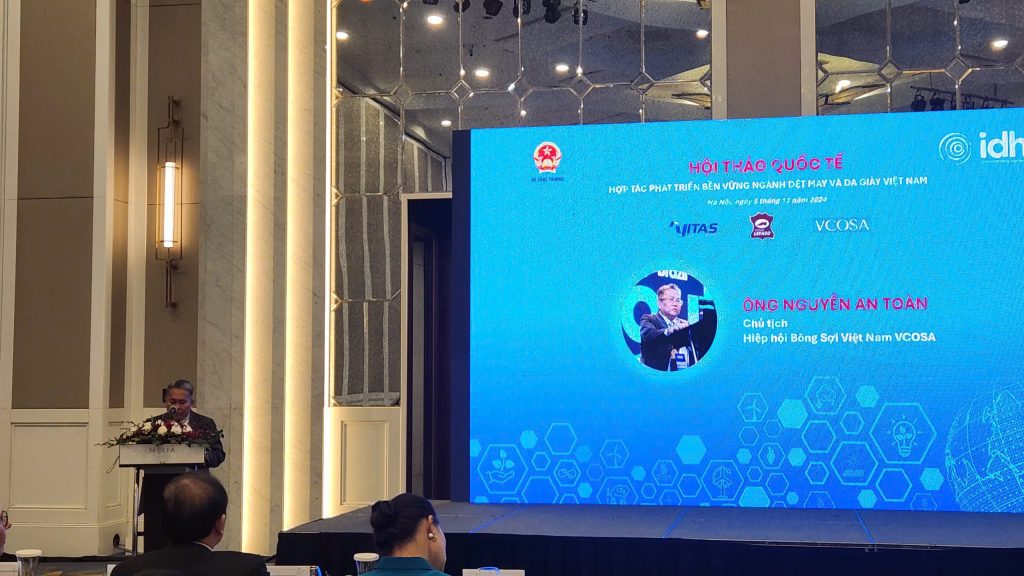
Mr. Nguyen An Toan delivered a speech on “Opportunities and Challenges for Sustainable Development in Vietnam’s Cotton and Spinning Industry”
Regarding sustainable, circular, and green production, Mr. Toan commended VCOSA members such as Rang Dong Industrial Park – Aurora IP and Nextevo for pioneering sustainable production models that enhance product value and competitiveness. Over the past year, VCOSA has actively collaborated with international partners, including the International Cotton Association (ICA), Cotton Council International (CCI), and the Brazilian Cotton Growers Association (ABRAPA), to organize seminars, trade promotion programs, and training courses. These initiatives aim to help businesses stay ahead of trends and better prepare for future challenges.
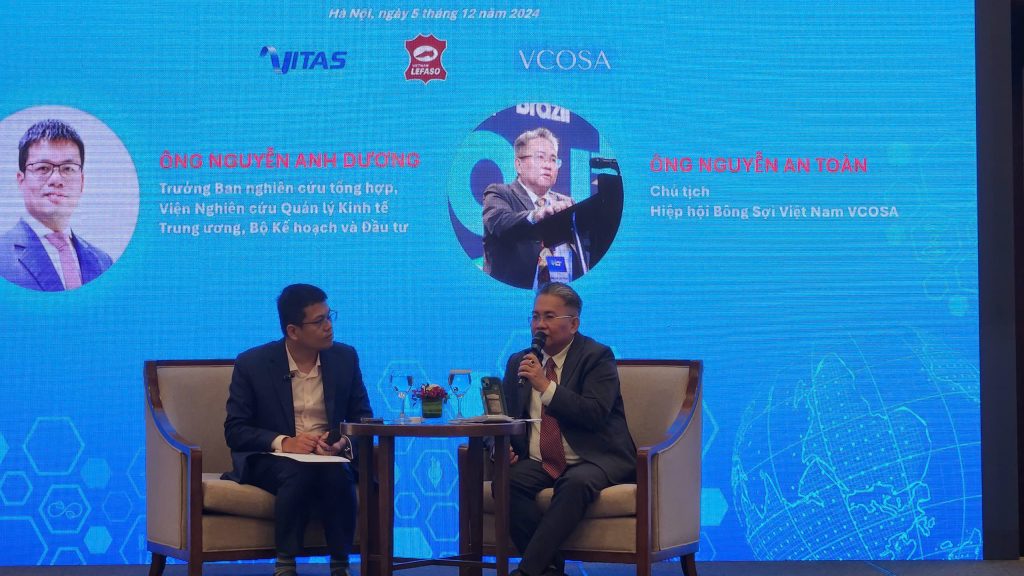
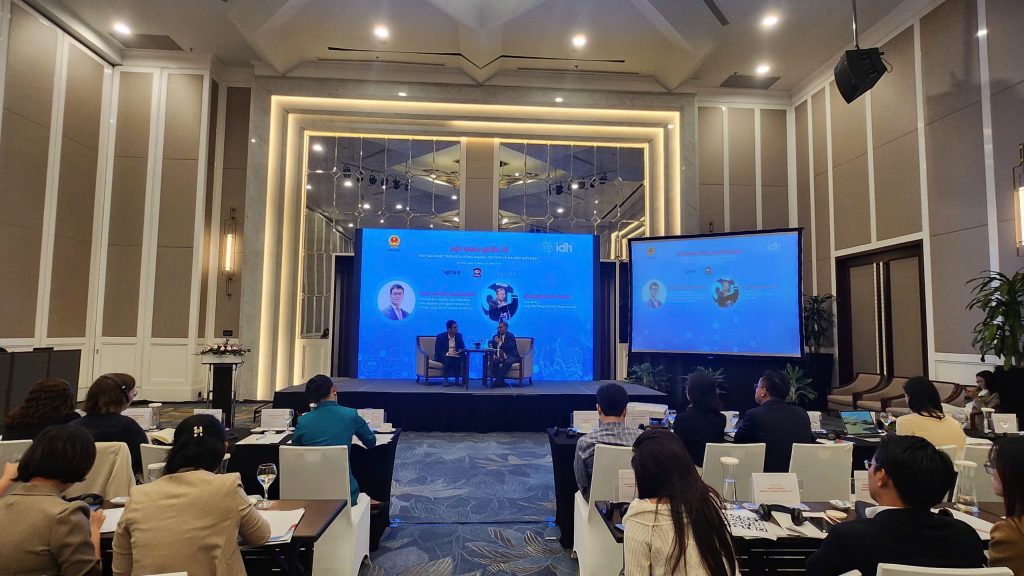
Mr. Nguyen An Toan moderated the Discussion Session: Initiatives to Address Environmental Challenges in the Textile and Footwear Industry
Despite these opportunities, Mr. Toan outlined several challenges facing Vietnam’s cotton and yarn industry, including reliance on imported raw materials, competition from Bangladesh and India, rising energy and fuel costs, and other barriers. Additionally, limited financial resources remain a significant obstacle for VCOSA as a non-governmental organization in effectively supporting member enterprises.
Recognizing these difficulties, VCOSA is focusing on addressing critical bottlenecks. Mr. Toan emphasized that signing the MoU for Sustainable Development Cooperation in Vietnam’s Textile and Footwear Industry is a crucial step. It enables VCOSA to collaborate with the Ministry of Industry and Trade, IDH, and other stakeholders to foster sustainable development within Vietnam’s cotton and yarn industry, solidify its global standing, overcome challenges, and capitalize on opportunities for future achievements.
VCOSA sincerely appreciates the effective collaboration from the Ministry of Industry and Trade, VITAS, LEFASO, and IDH in successfully organizing the international conference. VCOSA firmly believes this initiative will serve as an important foundation for advancing public-private partnerships and contribute significantly to the sustainable development of Vietnam’s cotton, textile, and footwear sectors during the 2025–2030 period.
VCOSA