1. GIÁ CẢ THỊ TRƯỜNG
A. Tình hình nhập khẩu NPL dệt may tuần từ ngày 09/08 ~ 16/08/2022
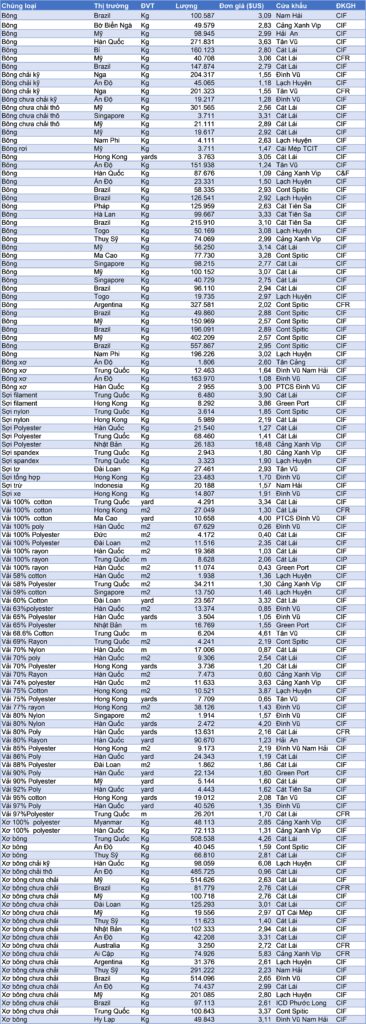
Nguồn: VITIC
B. Giá cả thị trường tuần 15/08 ~ 19/08/2022
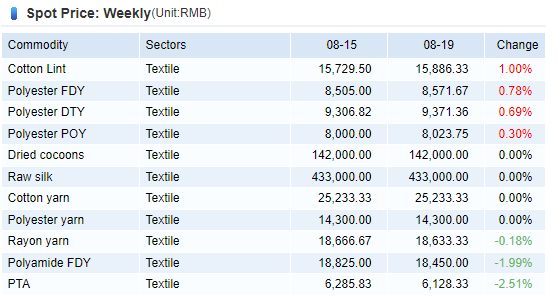
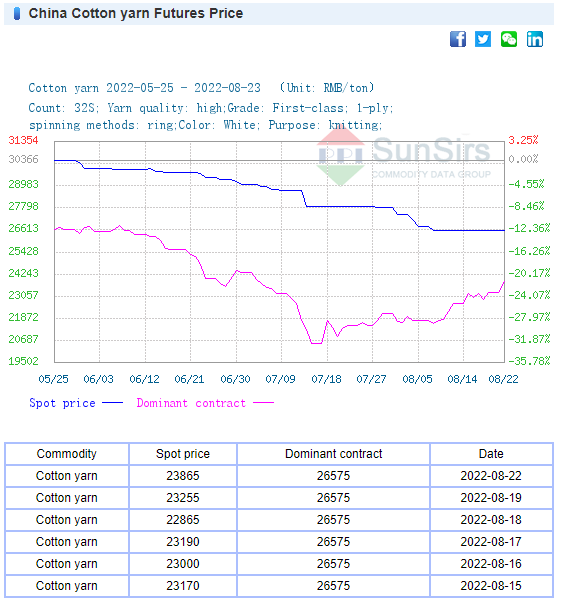
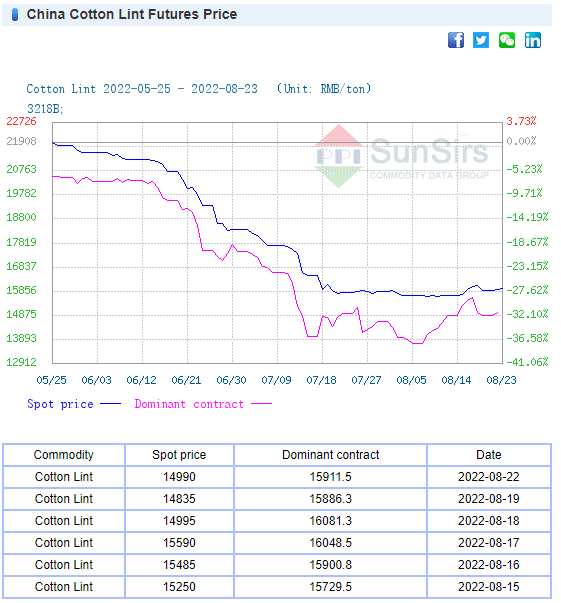
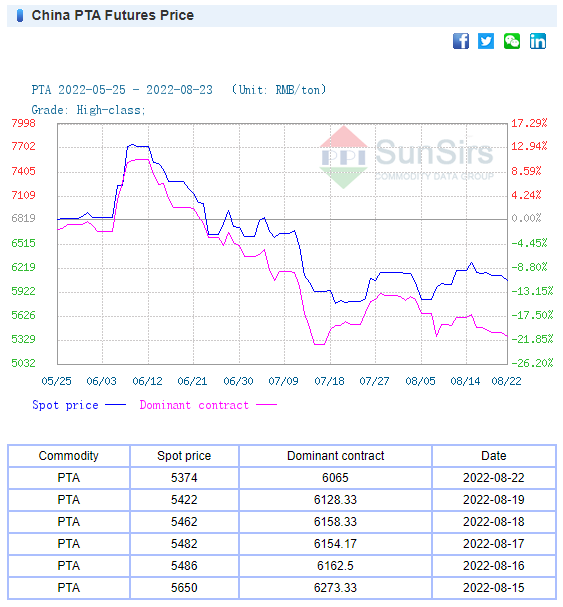
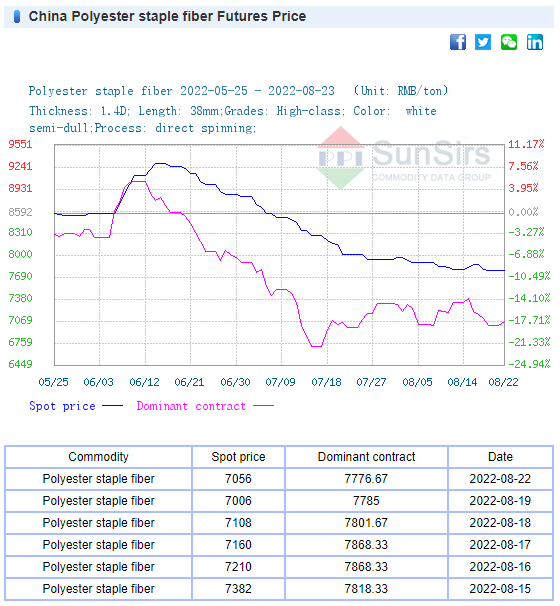
2. BIẾN ĐỘNG GIÁ
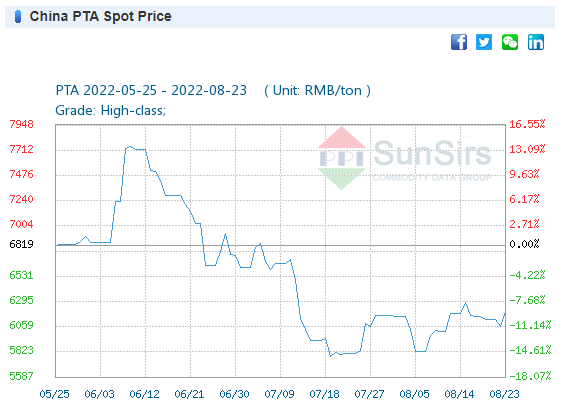
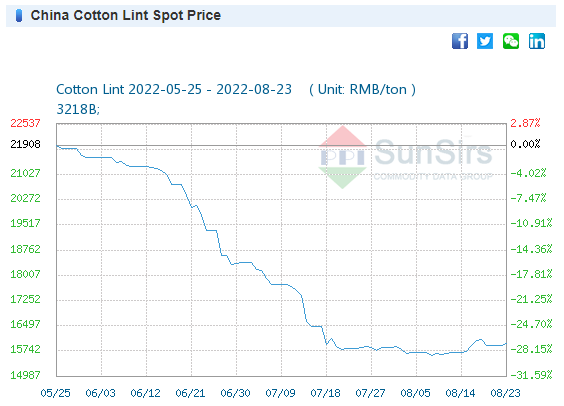
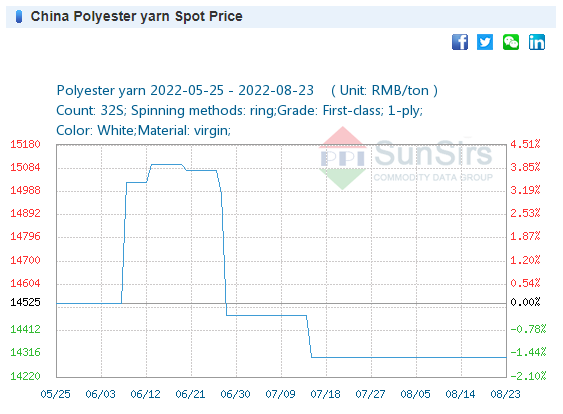
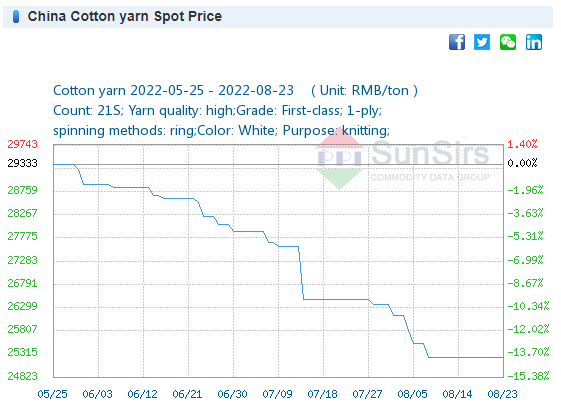
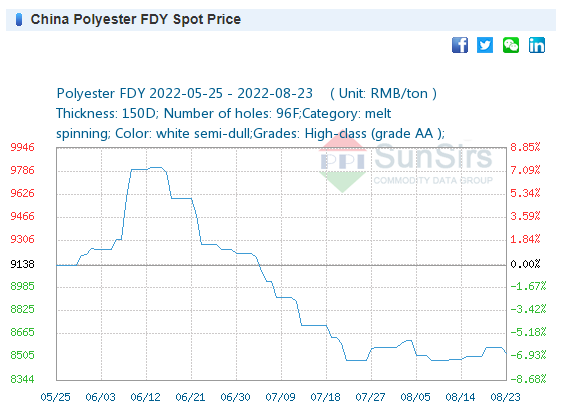
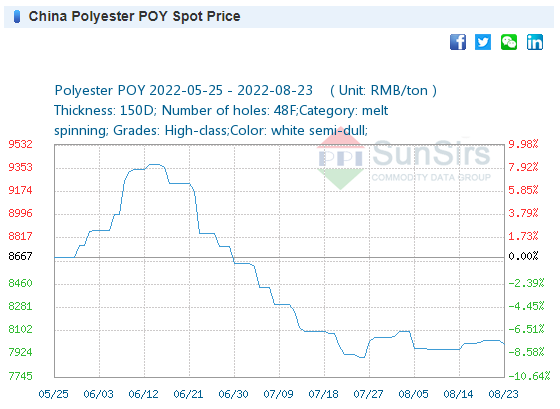
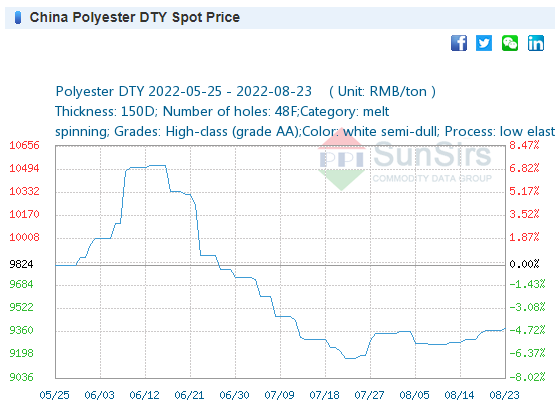
3. TIN THỊ TRƯỜNG
Giá nguyên liệu cao dẫn đến sản xuất sụt giảm
Giá nguyên liệu đầu vào tăng cao chưa từng có khiến các nhà máy dệt may phải thu hẹp sản xuất trở lại. Giá cả tăng cao đã làm cho các công ty này hoạt động không có lãi.
AC Eswaran, chủ tịch Hiệp hội các nhà sản xuất hàng dệt kim Nam Ấn Độ (SIHMA), cho biết các nhà máy may mặc cung cấp cho thị trường nội địa đã giảm 50% sản lượng. Ông nói thêm rằng hàng nghìn công nhân làm việc tại quận Tirupur đã bị ảnh hưởng.
Theo Hiệp hội các nhà máy sợi Nam Ấn Độ (SISPA), một số nhà máy dệt thuộc các doanh nghiệp siêu nhỏ, nhỏ và vừa đã phải đóng cửa tạm thời hoặc vĩnh viễn do không có bông chất lượng tốt với giá cả phải chăng.
Do giá bông cao và giá sợi thấp, ngành kéo sợi bị lỗ rất lớn trong hoạt động hàng ngày của mình. Bông được bán với giá khoảng 100.000 Rupee/candy (355 kg) và giảm xuống còn 82.000 Rupee/candy vào tháng 7. Bông hiện đã tăng trở lại ở mức 100.000 Rupee. Mức tăng 18.000 Rupee/candy chỉ diễn ra trong một thời gian ngắn. Theo chủ tịch hiệp hội J. Selvan, do sự biến động này của giá bông, các nhà máy đang bị lỗ từ 40 đến 50 Rupee mỗi kg sợi. Nếu tình hình hiện tại tiếp tục, nhiều doanh nghiệp có thể trở thành nợ xấu (non-performing assets), ông nói.
Các hiệp hội cho biết các công ty đa quốc gia không được phép thu mua bông nội địa. Một số công ty đa quốc gia đang mua nhiều hơn và tích trữ, theo SIHMA. Tổ chức này cho biết chỉ nên cho phép xuất khẩu bông và sợi sau khi nhu cầu trong nước được đáp ứng. Chủ tịch SISPA nói thêm rằng bông nên được loại bỏ khỏi nền tảng của các sàn giao dịch đa hàng hóa và nên được phép xuất khẩu, tùy thuộc vào tình trạng sẵn có trong suốt mùa vụ.
Nguồn: Textile Value Chain _ Ngọc Trâm biên dịch
======
High raw material prices results in reduced production
The prices of raw materials have reached an all time high and as a result the textile mills and garment units have reduced their production. The soaring prices have made operations unviable for these units.
A.C. Eswaran, President, The South India Hosiery Manufacturers’ Association (SIHMA) said that garment units catering to the domestic market have brought down production by 50%. He further said, that lakhs of workers, working in Tirupur district have been affected by this.
According to the South India Spinners Association (SISPA), several textile mills in the Micro, Small and Medium-scale Enterprises (MSMEs) categories have shut down, either temporarily or permanently, as quality cotton is not available at affordable prices.
The spinning sector is incurring huge cash losses in day-to-day operations due to high cotton prices and low yarn prices. Cotton was sold at about ₹1 lakh a candy (355 kg) and it dropped to ₹82,000 a candy in July. It has risen to the ₹1 lakh level again. The hike of ₹18,000 a candy was within a short period. The mills are incurring cash loss of ₹40 to ₹50 a kg of yarn because of this volatility in cotton prices, said association president J. Selvan. Many mills may become non-performing assets (NPA), if the current situation continued, he said.
The associations said multinational companies (MNCs) should not be permitted to procure domestic cotton. Some MNC companies are purchasing more, and stocking up, said SIHMA. Export of cotton and yarn should be permitted only after meeting the domestic needs, it said. The SISPA president further added that cotton should be removed from the Multi Commodity Exchange platform and cotton exports should be permitted subject to its availability for the entire season.
Source: Textile Value Chain
———————————————————————————————————————————–
- Dữ liệu giá được tham khảo từ thị trường Trung Quốc và Tổng Cục Hải quan Việt Nam.
- Tham khảo dữ liệu giá hàng tuần và lịch sử biến động giá để có thông tin về biên độ biến động giá cả thị trường qua từng kỳ vì đơn giá sợi tham khảo từ thị trường Trung Quốc và các nước khác với đơn giá sợi sản xuất tại Việt Nam.
- Bài viết phân tích, nhận định và đánh giá về giá cả thị trường tham khảo từ nhiều nguồn thông tin. Tiếng Việt do VCOSA dịch và biên tập. Luôn có bản gốc để đối chiếu ngay dưới mỗi tin.
- Một số thông tin giá sợi bị ẩn vì quyền riêng tư (chỉ dành cho hội viên VCOSA), vui lòng liên hệ Hotline +84-902379490 để gửi yêu cầu và nhận thông tin thêm.
- VCOSA đang tìm kiếm thêm nguồn dữ liệu giá từ các thị trường trọng tâm để bổ sung đầy đủ hơn. VCOSA cũng trong giai đoạn xây dựng bộ dữ liệu giá nhập khẩu sợi vào Việt Nam và giá sợi sản xuất tại Việt Nam và sẽ sớm ra mắt.
==============
- Price database is referenced from the Chinese market and the General Department of Vietnam Customs.
- The unit price of yarn referred from Chinese market and other countries which is different from the unit price of yarn produced in Vietnam, so please refer to the weekly price data and historical price fluctuations for the range of market price fluctuations per period.
- The article analyzes, comments and evaluates the market price referenced from many sources. Translated and edited by VCOSA in Vietnamese. There is always an original to compare just below each news.
- Some yarn price information is hidden for privacy (VCOSA members only), for more information, please call our hotline at + 84-902379490.
- VCOSA is looking for more sources of price data from major markets to make it more complete. VCOSA is also developing a dataset of import prices of yarn to Vietnam and prices of yarn produced in Vietnam, which will be available soon.