Cotton prices have further plunged at the end of last week in New York, reflecting massive selling by speculative funds. Prices are not expected rebounding in the next season, due to a recovery of global production. In China, demand remains anemic, further depressing domestic prices. Prices are much more resisting in India and Pakistan.
Cotton prices are not giving signs they could rapidly rebound, having even last Friday tumbled on New York’s futures market, over massive sales of speculative funds.
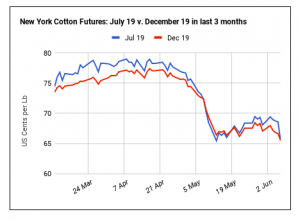
The nearby contract has fallen 3 cents per lb or 4.4% in a single session, eventually dropping 3.7% from a week earlier.
The December contract, reflecting the anticipated price in the next season, has only declined 1.2 cent or 1.7%, however from an already lower level.
Both contracts for current and next seasons have therefore ended the week at a similar weak level.
July 19 has lost no less than 29% from a year ago.
Amid a series of negative anticipations, investors do not expect the US and China could agree over a trade agreement in the coming period.
Such a deal would have included large Chinese buying of US agriculture products, including cotton.
In China, domestic prices are further falling due to a lower yarn production in the country. Demand for foreign cotton is very weak, after all 1% import quotas have been used.
Additional quotas have been allocated but they cover imports at higher tariffs, between 1% and basic 40% (65% for US cotton).
China could eventually return to the international market for replenishing its depleted official stocks.
There is no need to rush however, with domestic demand remaining very weak.
The global output is also expected sharply rising in the next season, which could be confirmed by the monthly report of the USDA, due on Tuesday.
On domestic markets in India and Pakistan, cotton markets have remained relatively quiet.
Demand could now rebound in Pakistan, after the end of Eid holidays.
The weakness of the rupee and the need to import cotton until the start of the new season in July will support prices at current levels.
Source: Emergingtextiles