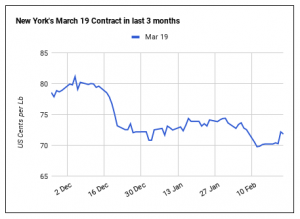
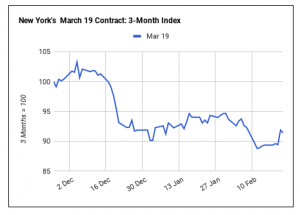
Cotton futures have rebounded in the past week in New York, with investors anticipating large Chinese buying after a trade agreement will have been signed between Washington and Beijing. The first USDA data covering the coming season have however reflected a rise in global ending stocks, as a clear sign that prices will not rise over the long term and whatever short-term volatility.
Cotton prices have begun recovering in the past week, in anticipation of a final agreement between China and the United States.
A series of MoUs (Memorandums of Understanding) have already been finalized, including on agriculture matters with China accepting to buy large quantities of US products, including cotton.
The return of Chinese buyers to the US market would inevitably boost New York futures.
A first rebound has occurred on last Thursday with contracts rising less than 2 cents per lb in a single session.
Friday has seen prices to contract over first forecast from the US Department of Agriculture (USDA) covering the next season 2019-20 with global ending stocks expected to rise.
Whatever the short-term rebound which will result of the US-China agreement, New York could stay depressed by a lack of demand in the coming period, reflecting a global economic slowdown.
In China, domestic prices have begun slightly rising over tighter supply this year, but demand remains very weak, reflecting the low level of yarn production in the country.
In India, prices have again dropped, also reflecting the low level of domestic yarn production, whereas demand for cotton fibers remains strong from Pakistan and Bangladesh.
In Pakistan, cotton prices have weakened in the past period and the benchmark indicator is now losing 100 rupees per week.
In Brazil, prices have slightly dropped in the past week, as reflected by our new table and charts at the end of this report.
Source: Emergingtextiles