Cotton yarn prices have slightly risen once again in Pakistan over a strong domestic demand whereas yarn export prices could be boosted by surging sales to China. Both countries have agreed over a free trade agreement covering textiles and apparel exports as of next July.
– From our Pakistan Correspondent Ahmed Fayz
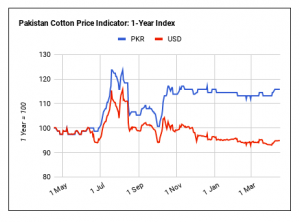
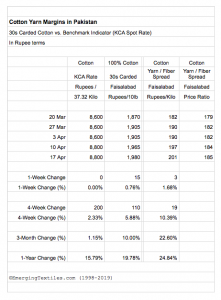
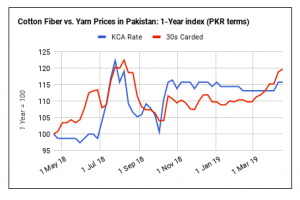
Cotton yarn prices have remained relatively firm in the past week in Pakistan, although cotton fiber prices have stopped rising in the country.
A strong demand and a weaker domestic currency are the two main reasons behind the new increase of price offers.
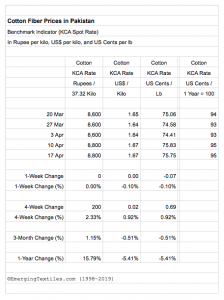
Benchmark KCA cotton indicator has however remained unchanged at Rs.8,800 per maund after rising Rs.200 per maund in the previous week.
As a result, cotton yarn prices have not moved on the export market.
The yarn export prices could however continue increasing, as Chinese importers would intend to buy large quantities of cotton yarns from Pakistan in the coming period.
Under a special arrangement, the Chinese authorities have allowed Pakistan to export an additional 350,000 metric tons of cotton yarns at zero tariff, rather than usual 3.5%.
In addition, negotiators have agreed over the second phase of the Free Trade Agreement which will offer Pakistan a duty-free access to the Chinese market for all textile and apparel, including cotton yarns, cotton fabrics, woven and knitted clothing, and home textiles.
The second phase will be signed in the last week of April and will be effective as of July 1st, 2019.
Poly-Cotton (PC) and Poly-Viscose (PV) yarns have remained firm on the Faisalabad and Karachi yarn markets, whatever the stability of polyester and viscose fiber prices in the country.
Benchmark 1.4 denier polyester is still stuck at Rs.193, thanks to a very high level of gross margins at the polyester plants in Pakistan.
Viscose staple fiber prices are no more moving in the country, in line with very stable import offers from the exporting countries in the current period.
VSF could however bottom out in the coming days, due to an expected strong seasonal demand.
Source: Emergingtextiles